


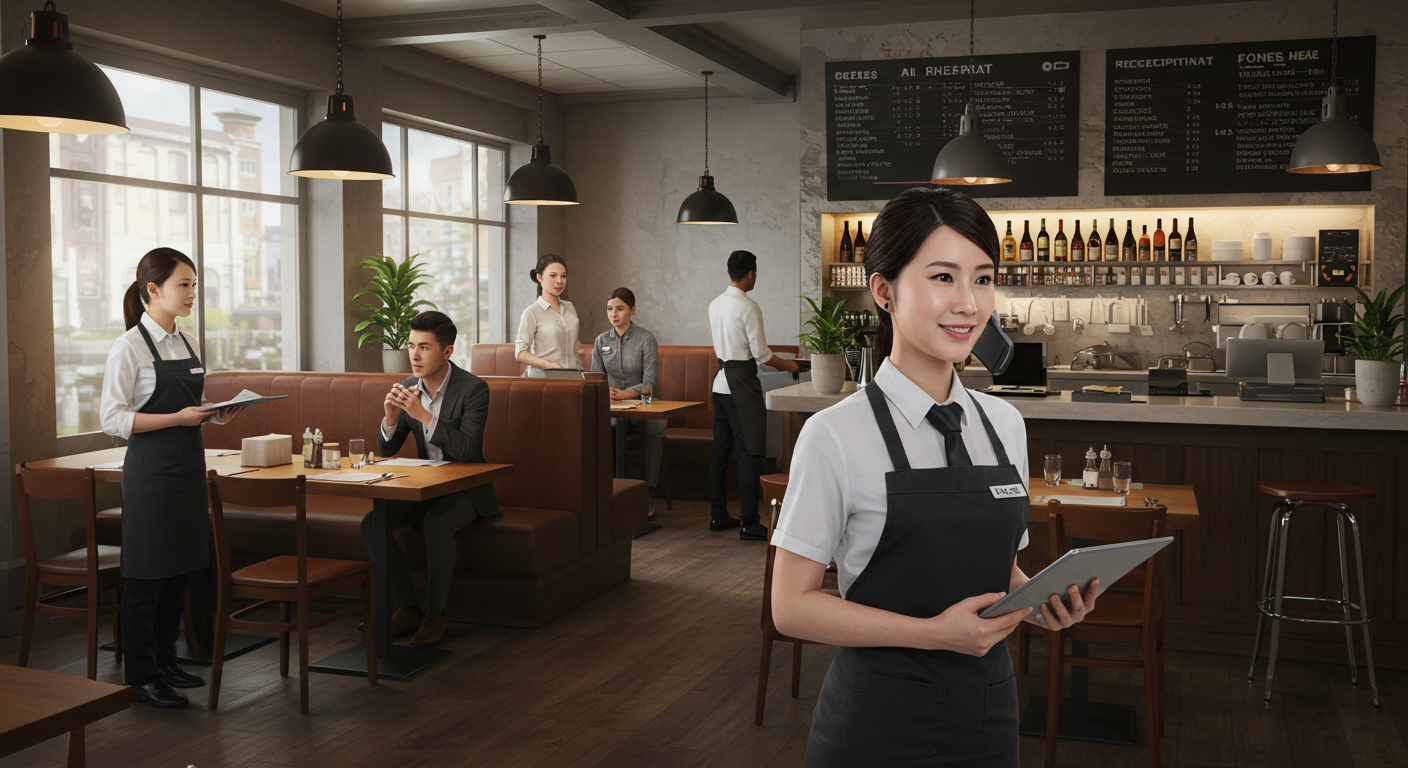
Analyze the differences of an AI restaurant receptionist vs traditional phone answering services to optimize booking management and reduce operational costs.
Key points
- Automated systems manage reservations and customer inquiries continuously without requiring additional front of house staff.
- Direct integration with reservation platforms like OpenTable ensures real time table availability checks and instant booking confirmations.
- Secure data handling protocols protect caller phone numbers, transcripts, and dining preferences during every phone interaction.
AI restaurant receptionist vs traditional phone answering services: three core operational differences
An AI restaurant receptionist vs traditional phone answering services comparison reveals three critical operational differences that directly impact booking rates and front-of-house efficiency.
- Direct reservation system integration: Traditional manual answering services rely on off-site human operators who lack live access to reservation books, meaning they can only take messages or manual requests. In contrast, the AI-powered receptionist platform Maitly integrates directly with third-party reservation platforms, such as OpenTable, to check real-time table availability and secure bookings instantly.
- Simultaneous call handling: Standard phone answering services or front-of-house staff can easily become overwhelmed during peak weekend rushes, leading to busy signals, long hold times, or missed calls. The automated AI receptionist handles dozens of simultaneous calls at any hour, ensuring no customer is placed on hold or sent to voicemail.
- Continuous, cost-effective coverage: Traditional live answering services charge high rates for overnight or after-hours coverage. This automated platform operates 24/7 to capture late-night reservation requests and general inquiries without increasing staffing costs, sending SMS messaging to callers upon request for ordering links or confirmations once caller consent is provided.
Automating reservation management: how digital receptionists secure bookings

Digital booking systems capture reservation details automatically, eliminating the need for front-of-house staff to manually note down guest names, party sizes, dates, and times during busy shifts. When comparing an AI restaurant receptionist vs traditional manual call handling, the automated approach ensures that no customer is placed on hold or sent to voicemail.
Callers who interact with the system can receive instant SMS confirmations and direct ordering links on their mobile devices, provided they give explicit consent during the call. This immediate digital follow-up secures the booking and provides guests with a direct channel for future communication.
For restaurant operators, a centralized web-based dashboard serves as the administrative hub for the entire system. From this single interface, managers oversee all account settings, review accurate call transcripts, and analyze guest dining history to optimize service delivery.
Securing caller data: maintaining privacy and compliance in automated phone systems
An AI restaurant receptionist vs traditional manual answering systems provides superior data protection by handling sensitive guest details through structured, secure digital pipelines. The Maitly.ai platform employs top-tier security protocols to safeguard customer data, call recordings, and reservation details, preventing the unauthorized exposure common with paper logs or unencrypted message pads.
Text-based communication remains strictly permission-based to respect guest privacy. Callers must explicitly opt in to receive text confirmations or booking links, and guests can opt out of these SMS updates at any time by replying STOP.
Beyond security, centralized data logging provides restaurant operators with structured, anonymous insights. The system automatically logs call volumes and booking times, allowing operators to analyze customer preference trends and peak call hours to optimize kitchen and front-of-house staffing.
Analyzing caller data: translating phone conversations into operational intelligence
Traditional answering services and basic automated systems record voice messages or log call times, but they fail to extract structured business intelligence from the actual conversations. Maitly.ai processes spoken inquiries to identify recurring customer preferences, peak booking hours, and common menu questions. This structured data allows hospitality groups to adjust kitchen prep schedules, optimize front of house staffing during high volume calling windows, and update digital menus based on the specific dishes callers ask about most frequently. By converting unstructured audio into clear operational trends, restaurant operators can make evidence based decisions that directly improve table turnover and guest satisfaction.
Evaluating operational limitations: when to transition from manual call handling to automated systems
Determining the precise moment to transition from manual call handling to an automated system requires analyzing front of house operational bottlenecks. Traditional phone answering relies entirely on physical staff availability, meaning peak dining hours directly conflict with telephone reception duties. When host stands experience high foot traffic, incoming calls regularly go unanswered, resulting in missed reservation opportunities and fragmented guest service. Implementing Maitly.ai resolves this conflict by decoupling physical presence from phone responsiveness, ensuring every inquiry receives an immediate, polite response.
Manual reception also introduces human error in booking logs, particularly during hectic weekend shifts. Automated reception systems integrate directly with reservation software to cross-reference table availability in real time, eliminating double bookings and manual entry mistakes. By transitioning to an automated receptionist, hospitality groups protect their staff from operational burnout while maintaining a consistent, professional brand voice on every call.
FAQ
Is the Maitly platform compatible with restaurants that manage bookings through OpenTable?
Yes, the platform integrates directly with third-party reservation systems such as OpenTable to check real-time table availability and manage bookings. This ensures that guest reservations are handled automatically and recorded directly into the existing restaurant workflow.
How does the Maitly AI receptionist compare to a traditional manual telephone answering service?
Unlike a traditional manual telephone answering service that relies on human operators, this platform provides 24/7 automated call handling and reservation management. It also offers advanced digital features, such as sending automated SMS messages to callers upon request for ordering links or confirmations.
Can a high-volume restaurant use this platform to handle incoming calls and reservations 24 hours a day, 7 days a week?
Yes, the service is specifically designed to provide 24/7 AI-powered call handling and reservation management. It operates continuously to ensure that every customer inquiry is answered politely and naturally, even during peak hours or after the restaurant has closed.
When should a restaurant operator avoid deploying the Maitly platform?
A restaurant operator should avoid deploying this service if they do not want to collect caller phone numbers, call recordings, transcripts, or reservation details. Additionally, if the business cannot obtain caller consent before sending SMS messages, this platform may not align with their operational model.
What security protocols are in place to ensure caller data remains safe over time?
The platform employs top-tier security protocols to ensure that sensitive customer data, including call recordings, transcripts, and reservation details, remains safe and compliant. This robust security framework protects restaurant and guest information against unauthorized access.